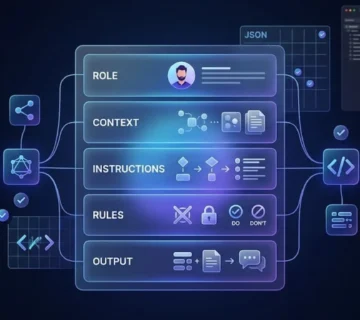

Do you actually need Python to work seriously with AI prompts, or can you get surprisingly far with strong writing skills?
I kept running into that question while looking at prompt-related jobs, and the answer turned out to be less satisfying than a simple yes or no. It depends almost entirely on what someone expects you to deliver.
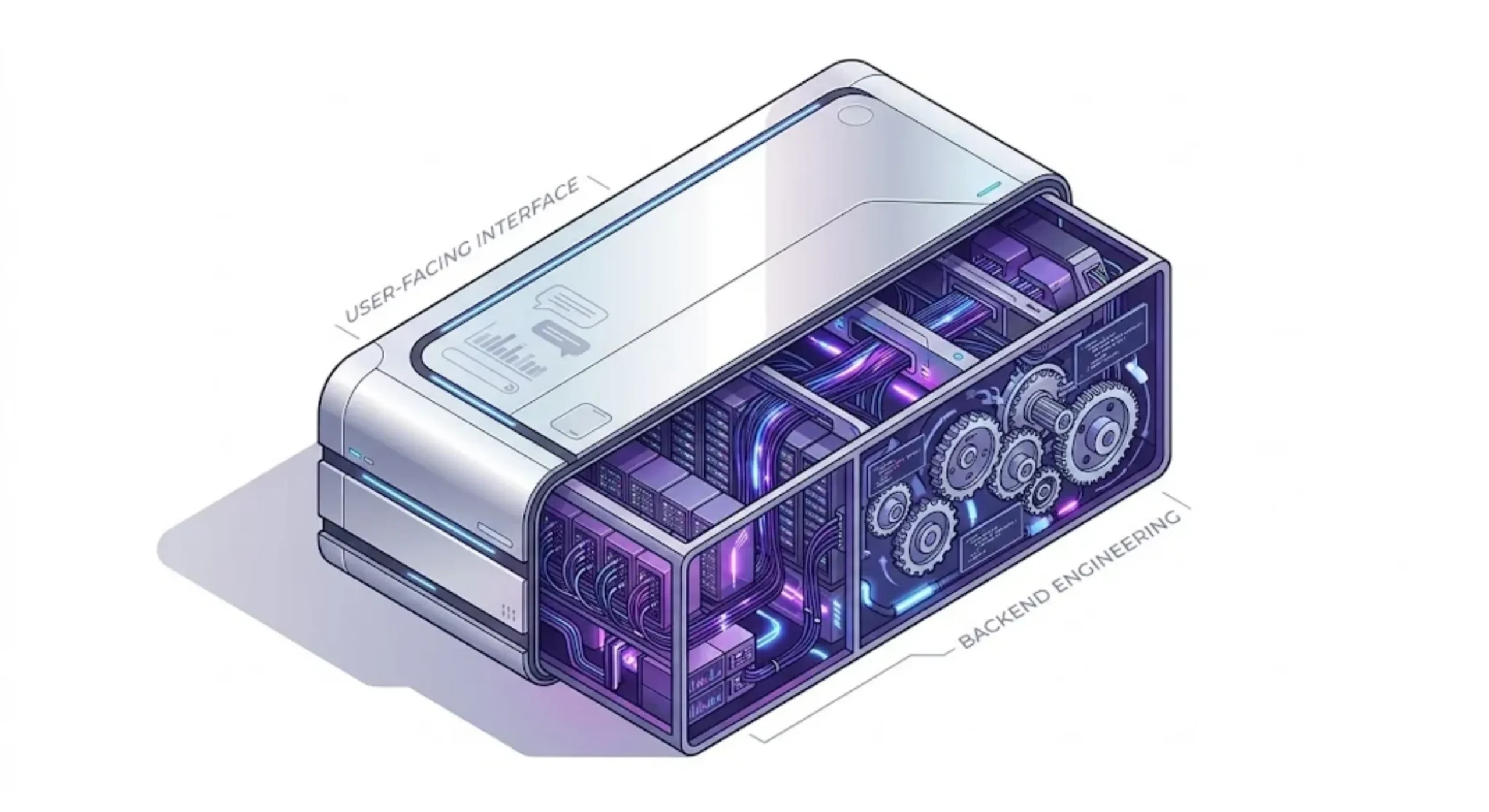
A prompt writer is usually focused on the instructions themselves: the context, examples, constraints, tone, and whether the AI produces something useful at the end. A prompt engineer can do all of that too, but may also be expected to build the software, evaluations, integrations, and data connections that make those instructions behave reliably inside a real application.
That’s where things get messy. The prompt writer vs prompt engineer distinction is useful, but the job titles themselves are anything but standardized. One company might advertise a “prompt engineer” role that is mostly language evaluation. Another may use the exact same title for a job involving APIs, production code, retrieval systems, and automated testing.
So rather than obsessing over the title, I think it makes more sense to look at the actual work. This guide compares the responsibilities, skills, tools, salary benchmarks, and career paths behind both roles so you can figure out which direction actually matches the kind of work you want to do.
Prompt Writer vs. Prompt Engineer: The Short Answer
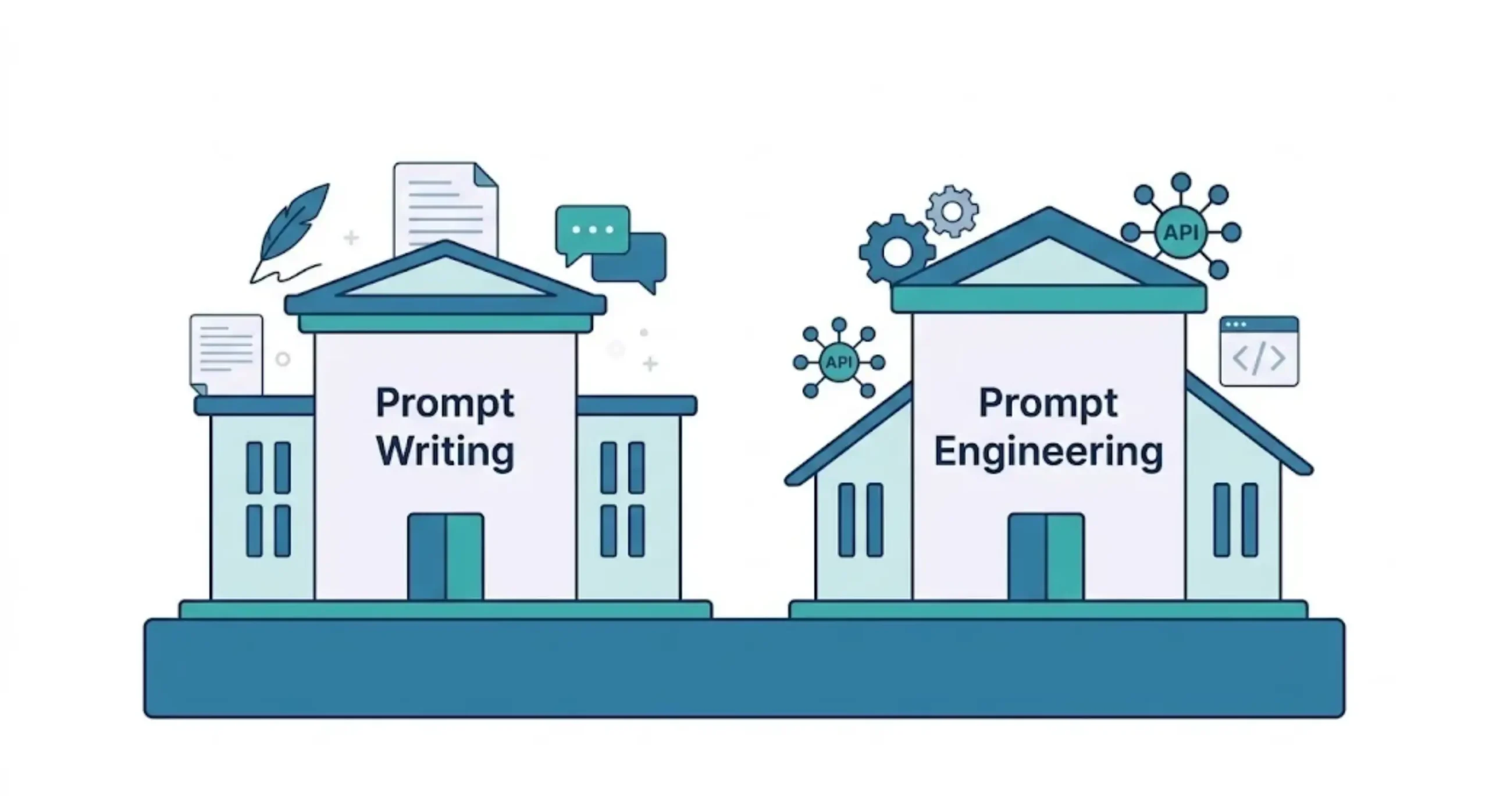
A prompt writer designs effective AI instructions. A prompt engineer designs and evaluates how those instructions behave inside a larger AI workflow.
There is plenty of overlap. Both roles need clear communication, enough domain knowledge to recognize nonsense, and the ability to look at an AI response and say, “No, that isn’t actually good enough.” The biggest difference is usually how far your responsibility extends beyond the prompt itself.
| Comparison | Prompt writer | Prompt engineer |
|---|---|---|
| Primary focus | Instructions and the quality of their outputs | Reliable behavior across a workflow or application |
| Typical deliverables | Prompt templates, examples, editorial rules, review rubrics | Prompt configurations, evaluation suites, API integrations, validation logic |
| Language skills | Central: clarity, tone, audience awareness, linguistic nuance | Important: precise instructions and unambiguous specifications |
| Domain expertise | Helps judge factual accuracy, usefulness, and audience fit | Helps define business rules, failure cases, and evaluation criteria |
| Coding | Often optional for content-focused work | Commonly needed when the role includes software integration |
| Python or JavaScript | Useful for automation and larger comparisons | Useful for API calls, experiments, tests, and application logic |
| Typical tools | AI chat interfaces, documents, spreadsheets, prompt generators | IDEs, APIs, SDKs, Git, evaluation tools, logs, databases |
| Quality checks | Accuracy, tone, relevance, completeness, editorial consistency | Task success, schema validity, failure rates, latency, cost |
| Business use cases | Content production, customer replies, learning materials, localization | Document processing, support automation, retrieval, tool-enabled assistants |
I would treat this table as a practical map rather than some sacred dividing line. Writers can absolutely run systematic evaluations, and engineers still need excellent language judgment. In practice, the boundary moves depending on the team.
What Does a Prompt Writer Actually Do?
A prompt writer takes a business or creative requirement and turns it into something an AI model can actually act on. That sounds simple until you try it. A vague request often hides half a dozen decisions about audience, inputs, boundaries, tone, missing information, and what the final result is even supposed to look like.
Imagine a retailer wants product descriptions generated with AI. The descriptions need to preserve the original specifications, avoid inventing claims, and sound consistent across hundreds of products. The prompt writer has to create the template, select useful examples, decide what should happen when information is missing, and then review whether the generated descriptions actually follow those rules.
If you want to go deeper into that process, explore the practical techniques used by professional prompt writers.
Typical Prompt-Writing Responsibilities
- Translate vague requests into specific deliverables.
- Define audience, voice, tone, and output structure.
- Select examples that demonstrate the desired behavior.
- Identify unsupported claims and missing context.
- Compare outputs and revise unclear instructions.
- Document reusable templates and their limitations.
The important point is that prompt writing is not just about producing an impressive block of instructions that looks complicated enough to deserve its own LinkedIn post. A good prompt writer should be able to explain why each instruction is there, what failure it is trying to prevent, and how someone can tell whether it worked.
What Makes Someone Good at It?
Editorial judgment matters enormously. You need to notice when an answer sounds polished but is quietly wrong, when an example contradicts another rule, or when a technically correct explanation is completely wrong for the intended audience.
Domain expertise becomes even more valuable here. An experienced customer-support specialist may immediately notice that an AI-generated response promises a refund the policy does not allow. A teacher may spot a misleading analogy in a lesson that reads beautifully to everyone else.
And no, you do not necessarily need coding to start doing this work. But you do need to be comfortable testing what you write, comparing outputs, and recording what actually improves the result instead of relying on vibes.
What Does a Prompt Engineer Actually Do?
A prompt engineer works on how model instructions behave as part of a repeatable system. Depending on the employer, that can mean writing prompts, but it can also involve evaluation, retrieval, tool use, structured outputs, validation, APIs, and application integration.
Take something as ordinary-sounding as an AI system that reads invoices. “Extract the invoice details” is the easy sentence. Someone still has to decide how the file reaches the model, which fields are mandatory, what happens when a value is missing, how the result should be formatted, and what the application should do when the output fails validation.
That’s where the engineering part starts to become much more obvious.
Typical Engineering Responsibilities
- Build or configure model calls through an API.
- Separate persistent instructions from variable inputs.
- Define structured outputs and validate their contents.
- Create evaluation cases covering normal and difficult inputs.
- Connect retrieval or tools where the application requires them.
- Track failures, latency, and operating cost.
- Retest behavior when prompts, models, or data sources change.
To be fair, one person will not necessarily do all of this. Some companies divide the work between software engineers, applied AI engineers, data specialists, domain experts, and people focused specifically on evaluation.
The title alone tells you surprisingly little.
Does Prompt Engineering Require Python?
Python is extremely useful, but treating Python as the definition of prompt engineering misses the point.
A web application may make JavaScript or TypeScript much more relevant. Some evaluation projects begin in spreadsheets. Others start inside a graphical interface before anyone writes a line of code.
The useful question is not, “Does a prompt engineer need Python?” It is, “What does this particular job expect me to build?”
If the vacancy says you will create integrations, run automated evaluations, or maintain production code, then programming is part of the job regardless of what title appears at the top of the page. If the role is centered on writing, reviewing, and scoring model responses, the technical bar may look completely different.
Read the deliverables before deciding whether you qualify.
One Business Problem, Two Very Different Contributions
The easiest way I found to understand the difference is to give both roles the exact same business problem.
Imagine a company wants an AI assistant that prepares customer-support replies using approved company policies.
The Prompt Writer’s Contribution
The writer focuses on what a good response should sound like and what it must never claim. They define the response style, escalation language, and useful examples. They might specify that the assistant should acknowledge the customer’s problem without promising a result that the supplied policy does not support.
Draft a customer-support reply using the supplied policy.

Acknowledge the reported issue.
Explain the relevant next step in plain language.
Do not promise a refund or delivery date unless the policy supports it.
If essential information is missing, identify what the support agent needs.

Return the draft only.
Then comes the less glamorous but more important part: testing it. The writer reviews the outputs for tone, factual accuracy, usefulness, and unwanted behavior.
They might discover, for example, that the seemingly harmless instruction “be reassuring” causes the model to start making overly confident promises. So they replace it with more precise wording that preserves empathy without inventing an outcome.
The Prompt Engineer’s Contribution
The engineer has to make sure the assistant receives the correct policy in the first place, configures the model request correctly, and produces something usable before the response enters the support workflow.
They may create tests for outdated policies, missing order details, conflicting information, or customer messages containing instructions that try to manipulate the assistant.
They also need to define failure behavior. What happens when retrieval produces no policy? What happens when a required field is missing? What happens if the response is incomplete?
And here’s the catch: a prompt cannot enforce application permissions by sheer force of wording. If the assistant is not supposed to access or modify something, those controls need to exist in the surrounding system.
The two roles reinforce each other. Perfect technical plumbing can still produce terrible customer replies, while a beautifully written prompt can fall apart if the system retrieves the wrong policy.
Prompt Writer and Prompt Engineer Salaries: What Can You Actually Compare?
This is where job-title comparisons become especially dangerous.
There is no single salary number that neatly represents every job labeled prompt writer or prompt engineer. The responsibilities can vary wildly, and so can seniority, location, industry, and whether the work is salaried, freelance, or contract-based.
A writing-focused contract should not be compared directly with a senior software role that includes responsibility for production infrastructure. Likewise, a compensation figure in a job ad may include bonuses or equity rather than representing base salary alone.
U.S. Salary Benchmarks for Related Occupations
The U.S. Bureau of Labor Statistics reports the following median annual wages for May 2025. These are broader occupational benchmarks, not measured salaries for prompt writers or prompt engineers.
| Related occupation | U.S. median annual wage, May 2025 | How to use the comparison |
|---|---|---|
| Writers and authors | $76,910 | Context for work primarily involving professional writing |
| Technical writers | $90,390 | Context for documentation and specialized communication |
| Software developers | $135,980 | Context for roles involving substantial application development |
Source: U.S. Bureau of Labor Statistics, Occupational Outlook Handbook occupation pages, consulted September 2026. Median means half earned more and half earned less. These figures are not entry-level offers, international benchmarks, freelance rates, or a forecast of your earnings.
It is tempting to look at the difference between those numbers and conclude that learning prompt engineering automatically earns you some giant AI salary premium. It doesn’t.
These medians describe different groups of workers doing different jobs with different levels of responsibility and experience. They do not measure the financial value of learning a particular prompting technique.
How I Would Evaluate a Specific Offer
- Scope: Are you producing content, evaluating responses, building software, or somehow being asked to do all three?
- Level: Is the employer looking for a beginner, an experienced specialist, or someone who will effectively lead the technical work?
- Location: Which labor market determines the pay, including for remote work?
- Compensation: Does the advertised figure mean base salary, or total compensation with bonuses and equity included?
- Employment type: Is this a salaried role, temporary contract, freelance project, or task-based work?
- Accountability: Are you responsible for a draft, an evaluation process, or an actual production system?
I would compare several vacancies with similar responsibilities before drawing conclusions. One spectacularly high salary attached to an AI-related title does not suddenly become the going rate for everyone who knows how to write a prompt.
Freelance Rates Need a Different Calculation
Freelance work introduces another trap because the project fee can look much better than the effective hourly rate.
A freelancer has to account for research, testing, revisions, client calls, emails, project management, and unpaid administration. That makes a freelance hourly equivalent very different from an employee’s hourly wage.
Take a hypothetical $600 project. If it requires 15 hours of work, the effective rate is $40 per working hour before expenses and taxes. If revisions and testing stretch the same project to 25 hours, that falls to $24 per hour.
That is not a recommendation for what anyone should charge. It is simply the kind of project math worth doing before accepting a fixed price.
Define the deliverables, revision limits, and acceptance criteria before agreeing to the number.
Where to Look for AI Prompt Writer Jobs
I would not limit a job search to the exact phrase “prompt writer.” A lot of relevant work appears under broader titles, and companies have not exactly reached a global agreement on naming any of this.
The terms below are better treated as search directions rather than guarantees that every vacancy will involve prompt design.
| Direction | Search terms to explore | What to check in the description |
|---|---|---|
| Writing and editorial | AI content specialist, AI editor, conversation designer | Templates, tone guidelines, content review, audience requirements |
| Evaluation and language | AI evaluator, language specialist, AI trainer | Scoring rubrics, response comparison, language expertise, contract terms |
| Technical implementation | Applied AI engineer, LLM engineer, AI application developer | APIs, coding, retrieval, evaluations, deployment responsibilities |
| Domain-focused work | AI specialist combined with your industry or profession | Whether subject expertise is central to evaluating the output |
Read the responsibilities carefully. Some AI evaluation jobs mostly involve rating existing responses rather than writing prompts. Some content jobs involve a surprising amount of manual editing. An AI-heavy title does not automatically mean the work looks anything like prompt engineering.
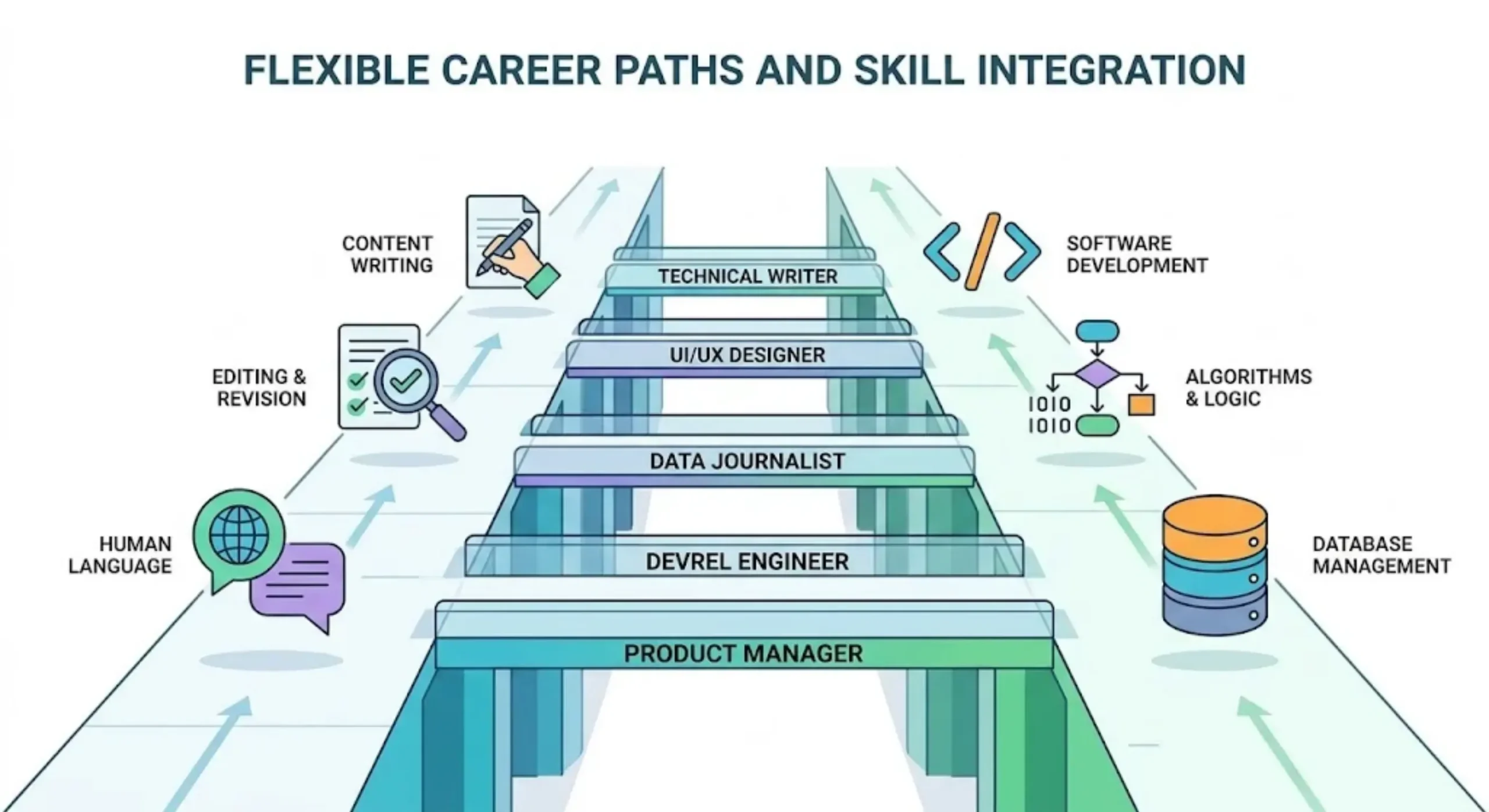
Career Path 1: Start With Writing and Domain Expertise
This route makes the most sense if you already like editing, teaching, explaining, or thinking about how information lands with a specific audience.
I would start in a field where you already know enough to judge whether the AI is giving a genuinely useful answer. That might be ecommerce, education, customer support, technical documentation, marketing, or another area where you understand what “good” actually looks like.
- Choose a recurring task. Pick something with clear quality criteria, such as policy-based customer replies.
- Build a reusable brief. Define the inputs, constraints, examples, and expected output.
- Create varied test cases. Do not test only on perfect inputs. Include missing, incomplete, and conflicting information.
- Review consistently. Use a rubric rather than deciding that an answer is good because it “sounds nice.”
- Document revisions. Record which failure each change was designed to fix.
You can use the ready-to-use AI prompt examples as starting material, then adapt them to a field where you have enough expertise to judge the answers properly.
From there, you may find yourself moving toward content operations, conversation design, evaluation, or technical communication. Those are possible directions, not some guaranteed ladder where completing five prompts unlocks the next job title.
Career Path 2: Add Coding, APIs, and Evaluation
This route is a better fit if the interesting part for you is making the workflow operate reliably again and again, especially if you enjoy debugging why something worked on nine inputs and suddenly collapsed on the tenth.
- Learn basic programming. Get comfortable with functions, files, data structures, and error handling.
- Understand an API request. Learn authentication, request bodies, responses, and usage costs.
- Build a small task. For example, extract a few defined fields from supplied documents.
- Validate the output. Check required fields and business rules outside the model instead of assuming the model will always obey.
- Create evaluations. Record expected behavior for normal, incomplete, and difficult inputs.
- Compare revisions. Measure output quality alongside latency and cost.
You do not need to begin by constructing a giant autonomous agent with 14 tools, three databases, and a diagram that looks like an airport map.
A small application with clear validation, understandable error handling, and evaluation results you actually measured is a much stronger demonstration than a complicated demo that succeeds only on the exact example used in the presentation.
As your technical responsibilities expand, possible directions include applied AI development, evaluation infrastructure, and AI product engineering.
Build a Portfolio That Shows Judgment, Not Just Prompts
A folder containing 50 prompts proves that you wrote 50 prompts. It does not automatically prove you can solve a useful problem.
A case study is much stronger because it shows what happened after the prompt met reality.
For a Writing-Focused Portfolio
Build a small prompt pack around one specific business use case. Include the original brief, your template, several anonymized inputs, the rubric you used to review the outputs, and examples of revisions you made after testing.
Explain how you handled unsupported claims, tone mismatches, contradictory requirements, and missing information. If the project is simulated rather than real client work, say so clearly.
For an Engineering-Focused Portfolio
Build a small working application and show its input format, prompt configuration, validation rules, evaluation cases, and known failure modes.
Report the results you actually measured. A system working correctly in five screenshots is not the same thing as production reliability, and API keys absolutely do not belong in a public repository.
For Either Path
Start with the business problem before introducing the tools. Then show what you changed, why you changed it, what improved, and what remains uncertain.
Employers and clients generally need evidence that you can produce useful work. A collection of prompts assigning the AI increasingly majestic job titles is less convincing.
Which Path Should You Choose?
I would start with a simpler question: what kind of work would you actually enjoy doing repeatedly?
- Choose a writing-focused starting point if you enjoy language, audience needs, editing, and domain-specific judgment.
- Choose a technical starting point if you enjoy coding, debugging, structured data, and repeatable testing.
- Explore a combined path if you want to shape the response experience and also build the workflow that supports it.
You can test this without making some giant career commitment. Pick one small project. Write a reliable customer-support response template, then build a simple evaluation around it.
Pay attention to which part keeps pulling you back in. Are you obsessed with refining the language? Do you enjoy finding the failures? Or do you immediately want to automate the whole process and see whether it survives 100 test cases?
That answer is probably more useful than the title.
Neither path removes the need for the other skill set completely. Writers benefit from technical literacy, and engineers become much better at this work when they can write precise, unambiguous instructions.
Where Promptsera Fits Into Your Learning
The Promptsera AI prompt generator can help turn an initial idea into a more organized brief. The AI Prompt Checker can also give you another perspective on instructions that may be vague or contradictory.
I would use tools like these as part of the practice process rather than treating them as an automatic stamp of quality.
A generated prompt is not a professional qualification, and a checker cannot certify that an AI application is reliable. You still need to test the output and make your own judgment.
You can also explore the AI Prompt Generators & Tools Directory for more starting points as you develop a workflow that suits the kind of work you want to do.
Frequently Asked Questions
Is Prompt Writing the Same as Prompt Engineering?
Not exactly, although the two overlap heavily. Prompt writing focuses primarily on designing, testing, and refining the instructions given to the model. Prompt engineering can extend into the surrounding software, evaluations, retrieval systems, integrations, and validation that make the workflow repeatable.
Can I Become a Prompt Writer Without Coding?
Yes, especially if the work is focused on content, communication, or evaluation. Coding is not a prerequisite for writing useful prompts. You do, however, need strong judgment, enough subject knowledge to catch bad outputs, and some repeatable way to test whether your instructions are actually improving the results.
Do Prompt Engineers Always Need Python?
No. Python is common and useful, but the right language depends on the application. A web-based project may lean heavily on JavaScript or TypeScript. What matters is whether the role involves APIs, automated testing, data processing, or production integration. Once those become part of the job, some form of programming is usually required.
Which Role Pays More?
The title by itself does not tell you. A software-heavy prompt engineering position may pay substantially more than a writing-focused contract because the responsibilities are completely different. Compare the scope, seniority, location, and employment terms rather than relying on the label. Broad software-development wage data should not be presented as though it were automatically a prompt-engineer salary average.
Can a Prompt Writer Move Into Engineering?
Yes. In fact, the transition is fairly logical. You can keep the instruction-design skills you already have and add programming, API use, structured-output validation, and automated evaluation around them.
Do I Need a Certificate?
That depends on the employer, and I would check actual vacancies before spending money on one. A course can give your learning some structure, but a certificate does not replace demonstrable work and certainly does not guarantee employment.
Choose the Work Before the Title
The most useful way I found to think about prompt engineering vs prompt writing is to ignore the glamour of the titles and look at responsibility.
Are you mainly improving the brief and judging the content it produces? Or are you also responsible for the software, integrations, evaluations, and failure handling wrapped around that brief?
That distinction is much more useful than trying to decide which title sounds more advanced.
Start where your existing strengths are strongest. Build something small enough that you can actually test it. Then add the skills that repeatedly appear in the roles you want.
In the end, being able to solve a specific problem reliably is far more valuable than choosing the most fashionable AI label.
Ready to practice? Build a brief with the free Promptsera prompt generator, then use the complete prompt writer guide to test, evaluate, and improve it.